
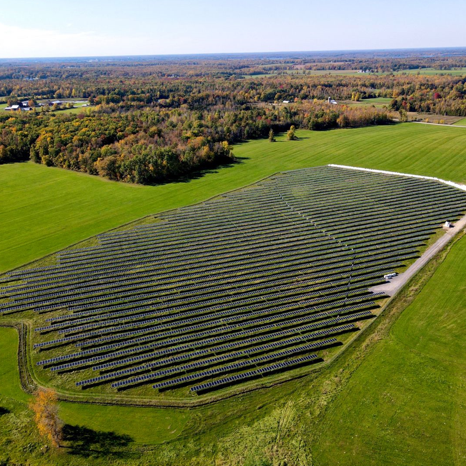
Community Solar: Fast, Scalable Energy for the Digital Economy

America’s demand for electricity is climbing at an unprecedented pace. From the rapid expansion of data centers fueling artificial intelligence to the electrification of buildings and transportation, our energy infrastructure is under immense pressure. Meeting this demand requires fast, flexible, and scalable solutions—and distributed generation (DG) solar, including community solar, is emerging as one of the smartest strategies available.
Why Community Solar Fits the Moment
Utility-scale solar projects are an important part of the solution, but can take years to complete. To address demand at the local level, DG solar projects, particularly community solar, can be deployed quickly, built close to where demand is highest, and integrated directly into existing grid systems.
 One of the biggest advantages of community solar is its ability to alleviate pressure on the transmission system. By generating electricity locally, these projects reduce the need for long-distance power delivery and help ease congestion on heavily used transmission lines. This makes the grid more efficient and responsive to local demand.
Local generation also cuts down on line losses, which occur when electricity travels long distances. By reducing these losses, community solar improves overall grid reliability and ensures more of the generated power reaches homes and businesses.
Another key benefit is scalability. Community solar projects can be developed quickly and expanded to match rising demand, providing a clean and pollution-free power source that grows alongside our digital and electrified economy. At the same time, these projects allow communities themselves to participate in and benefit from clean energy development, all while reducing stress on utility infrastructure.
In short, community solar isn’t just about making clean energy accessible, it’s about creating modern energy infrastructure that can keep pace with the rapid growth of our digital economy.
Policy as the Gatekeeper
Despite the clear benefits, the growth of community solar remains uneven across the U.S., driven less by technology and more by policy. Supportive states offer incentives and stable net metering policies that make projects financially viable. Others, however, impose requirements that increase costs without providing adequate compensation, limiting the ability of developers to bring new energy capacity online.
The Carrot: New York’s Model for Success
New York provides a clear example of how good policy translates into results. Its strong net metering framework, combined with programs through the New York State Energy Research and Development Authority (NYSERDA), has enabled community solar to expand rapidly. These policies make it financially attractive for asset owners to bring new solar projects online, ensuring reliable energy growth to meet rising demand.
The Stick: Financial Strains in Unsupportive States
In contrast, states without robust incentive structures often create conditions that undermine solar development. For example, requiring large subscriber discounts without offsetting compensation makes it nearly impossible for projects to remain financially sustainable. The result: fewer community solar projects, less local generation, and missed opportunities to meet growing power needs.
The Path Forward: Aligning Energy Demand and Solar Growth
To meet rising energy needs—especially those driven by data centers and AI—states must view community solar as critical infrastructure, not just a clean energy option. That means:
- Legislators enacting policies that encourage rapid deployment while ensuring profitability for developers
- Utilities supporting net metering and integrating distributed energy effectively
- Investors and asset owners receiving consistent incentives to drive new projects
Conclusion: A Strategic Energy Solution
America is at an inflection point. The explosion of digital infrastructure and electrification requires new sources of reliable, scalable energy. Community solar can deliver this capacity quickly, locally, and sustainably, if policy supports it. By treating DG and community solar as strategic investments in our energy future, we can ensure the grid keeps pace with demand while reducing costs and improving resilience.
Community solar isn’t just about clean energy access. It’s about powering the next generation of American innovation.